
Adaptive Traffic Control System - Tier 1 City
Most of the Indian cities are facing the ill effects of traffic congestion and seek contemporary solutions to ease the traffic congestion, improve road safety and reduce pollution. Cities in India currently rely on legacy traffic signals whose ‘signal cycle time’ does not correspond with the volume of traffic at an intersection thereby, does not bring respite from traffic snarls. SLS Constructions has successfully undertaken the installation and maintenance of vehicle adaptive signals in some of the high-density traffic corridors in key metropolitan cities in India.
These state-of-the-art Vehicle Actuated traffic signal have a type of sensor/microchip, called a "signal controller," which determines the timing and even the sequence of traffic movement for each phase and cycle, based on what vehicles or pedestrians are detected at the intersection. These smart signals can adjust the duration of Red & Green Light at intersections depending upon the density of vehicular traffic.
These traffic signals can be easily integrated with the existing ‘Central Traffic Command & Control Centre’ of the city.
The solution overview for the same is briefed as follows:
What it is?
• The sensors will visually determine the number of vehicles present at the stop line/signal and the ‘Dwell Time’ will be automatically adjusted after a lag of 2-3 seconds.
• This will reduce the need for manual intervention at the traffic signals and the vehicles users will also benefit from reduced wait timings.
How does the system work?
• The Smart Cameras installed at each leg of the intersection track the traffic density and correspondingly, the system automatically adjusts the Green Time accordingly.
• This system thereby, ensures that the priority is given to the traffic lane with higher vehicular density (More Green Time for vehicle clearance) and lesser ‘Green Time’ for traffic lanes with lesser traffic.
Advantages of Vehicle Actuated Signals:
• They can signal cycle time and thereby reduce delay (if properly timed).
• The average travel time is improved as well.
• They are adaptable to short-term fluctuations in traffic flow.
• Usually increase efficiency of the intersection (by continually reapportioning green time).
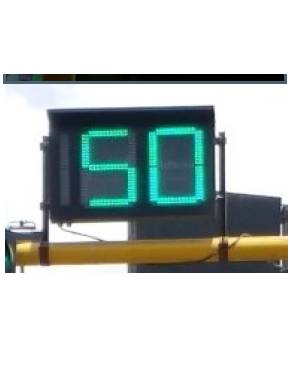
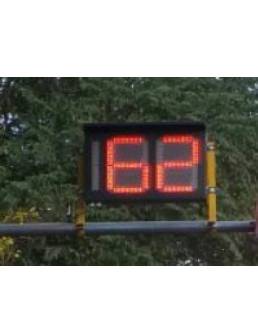
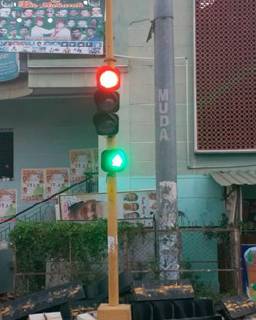
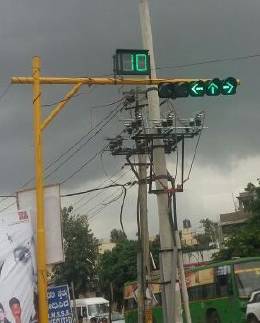
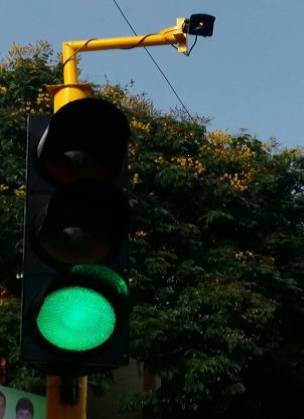
New Vehicle Adaptive Signals
2.jpg
https://slsconstructions.com/images/projects/new-vehicle-adaptive-signals/2.jpg
1.jpg
https://slsconstructions.com/images/projects/new-vehicle-adaptive-signals/1.jpg
4.jpg
https://slsconstructions.com/images/projects/new-vehicle-adaptive-signals/4.jpg
5.jpg
https://slsconstructions.com/images/projects/new-vehicle-adaptive-signals/5.jpg
3.jpg
https://slsconstructions.com/images/projects/new-vehicle-adaptive-signals/3.jpg
